
. Skip to main content
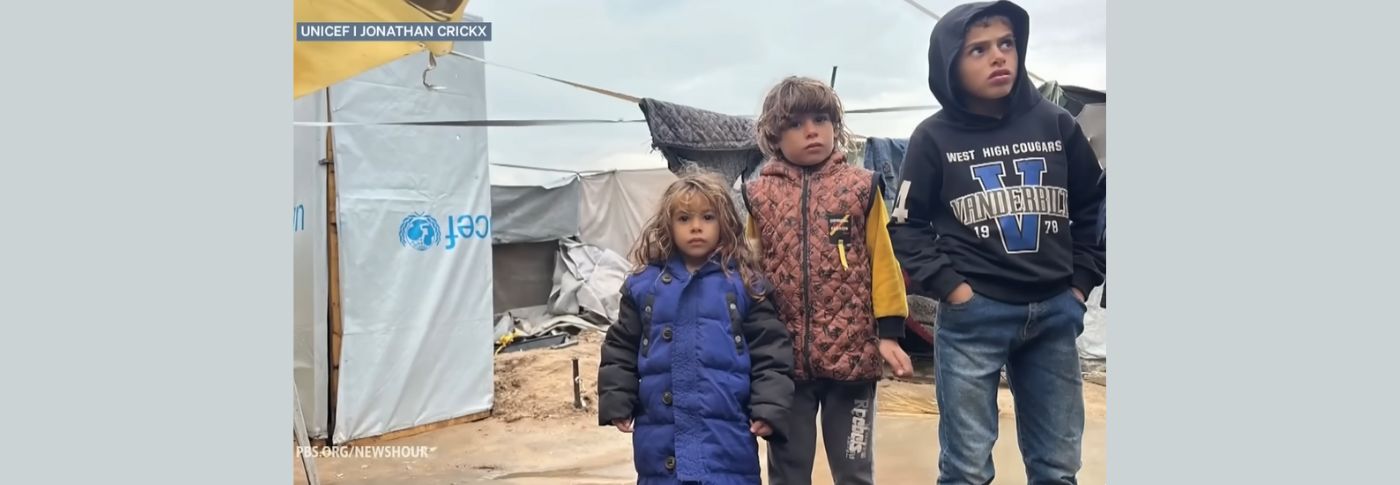
Displaced children stand outside temporary shelters in Gaza near a UNICEF tent, wearing winter clothing as families face ongoing shortages of food, shelter, and warmth months after a ceasefire.

Photo credit: Jonathan Crickx, UNICEF

December 16, 2025

Displaced Palestinian Children Struggle with Cold, Malnutrition in Gaza Months After Ceasefire

Displaced families face ongoing hardship in Gaza.
Share

Share On Facebook
Share On Twitter
Share On Pinterest
Share On LinkedIn
Email

Note: If you are short on time, watch the video and complete this See, Think, Wonder activity: What did you notice? What did the story make you think about? What would you want to learn more about?

More than two months after the ceasefire agreement between Israel and Hamas, humanitarian conditions in Gaza remain dire. The United Nations estimates that 1.5 million people lack shelter. Ali Rogin speaks with UNICEF’s Jonathan Crickx about conditions on the ground in southern Gaza.

Key Term

malnutrition — an imbalance between the nutrients a person's body needs to function and the nutrients it receives. According to John Hopkins, "Malnourished children may be short for their age, thin or bloated, listless and have weakened immune systems."

Remote video URL

Warm-Up Questions

  1. Who are the people being affected by malnutrition in the Gaza Strip? How many people are living in makeshift tents?
  2. Where is the Gaza Strip? (see map)
  3. How does UNICEF’s Jonathan Crickx describe the conditions in Gaza?
  4. What is the health status of children in Gaza, according to Crickx? How many children live in the Gaza strip?
  5. Why is the situation for getting aid into the Gaza Strip "complicated," according to Crickx?

Essential Questions

  • What do you think needs to happen to get more humanitarian aid to the Palestinian people inside the Gaza Strip?
  • Why do you think children are particularly affected by public health crises?
  • Media literacy: Why do you think the News Hour chose to interview a UNICEF worker? Why do you think Crickx chose to share the story about three-year-old Bisan, including description of her clothes and the tent where she lives?

What Students Can Do

Learn more about the United Nations' agency, UNICEF, by examining the different regions and issues the organization is working in. Then discuss what you learned with a family member or peer and conduct some more research into the issue together. Share what you learned with your class.

Subscribe to Our Newsletter

Want to see more stories like this one? Subscribe to the SML e-newsletter!

Republished with permission from PBS News Hour Classroom.

PBS News Hour Classroom
PBS News Hour Classroom helps teachers and students identify the who, what, where and why-it-matters of the major national and international news stories. The site combines the best of News Hour's reliable, trustworthy news program with lesson plans developed specifically for... See More
Advertisement

Post a comment

Log in or sign up to post a comment.