I recommend these steps for talking directly with caregivers about concerns—and I break down each one below:
- Name the concern
- Prepare
- Communicate with clarity, compassion and curiosity
- Follow up
Name the concern
CPS agencies address child maltreatment, which includes physical abuse, sexual abuse and neglect. These tips are only for concerns about suspected neglect, such as observed challenges with attendance, emotional disconnection from parents, health, hunger, hygiene or supervision.[8]
Prepare
Review policies. Start with state law, which may change faster than the common annual click-to-complete training. For example, you might find that your state only investigates reports that do not reflect poverty (about half of states use this exception).[9] You might also find requirements that must be met—such as evidence of school engagement before reporting attendance issues. Look at any district guidance relevant to the challenge identified. And consult an ethical decision-making framework that can inform critical thinking. “Reimagining Mandated Reporting,” a video from the Institute to Transform Child Protection, includes great questions, including:
- Am I reporting simply because I do not know what else to do?
- Am I making the report because I fear the consequences of not doing so?
- Do I have enough information to reach the legal standard of “reason to believe” (or the equivalent in my state)?
- Have I sought consultation or supervision from at least one person whose primary concern isn’t liability?
Family engagement often best proceeds at the “speed of trust.”[10] Whether or not you report your concern, state laws do not preclude you from reaching out to families. Schedule dedicated time for the conversation to avoid rushed discussions.
Considerhow race, ethnicity and culture can drive distinct approaches to parenting, day-to-day routines, communication styles and family dynamics. Jot down questions that might open a dialogue with the family, rather than statements that lead to a one-way conversation.
It might also help to consult your supervisor, student services chair, community schools coordinator or other such colleague. Try to talk with colleague(s) who can make it easy to identify and share the relevant contacts and resources in your school community that may directly address the root cause of the concern. For instance:
- Home visiting and mentorship programs are some of the most impactful ways to address patterns of absenteeism.
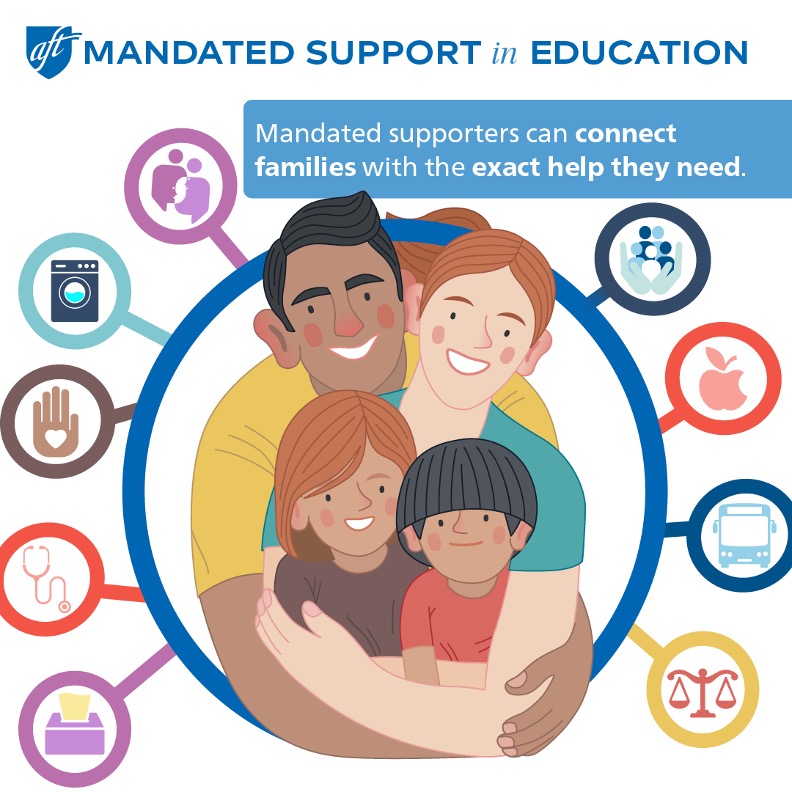
- Worn out clothes might mean the family would benefit from a clothes closet, detergent or better access to laundry facilities.
- Students who spend time alone might benefit from better access to after-school activities and transportation.
Communicate with clarity, compassion and curiosity
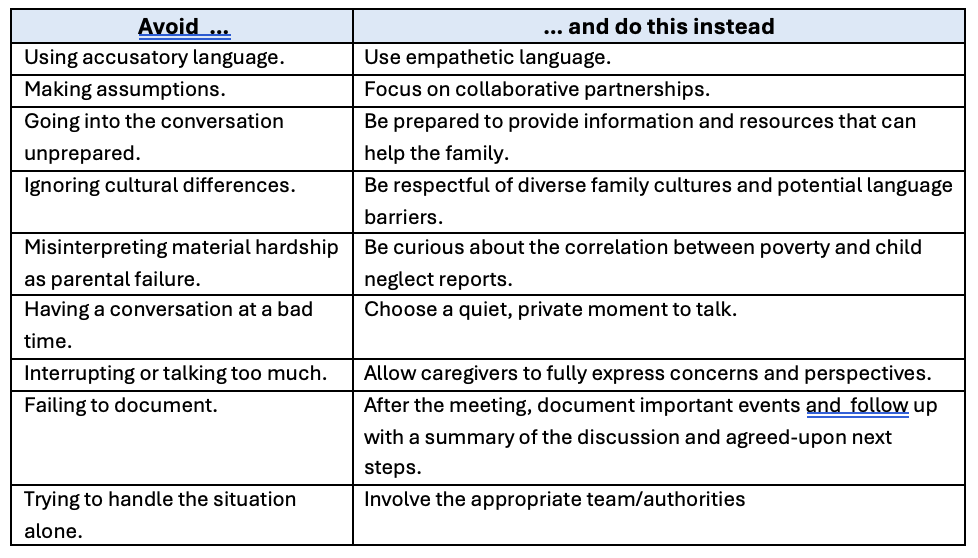
Start with the heart and express that you’re reaching out with genuine care. State observations factually and describe the impacts you’ve noticed or anticipate. Invite clarification, perspective and more information. Acknowledge and honor any additional details the family decides to share. Collaborate toward solutions by identifying and agreeing on specific, measurable next steps—these could include reasonable accommodations, referrals or warm introductions to nonjudgmental helpers and even reporting together, if the conversation reveals serious and imminent harm. Offer relevant resources and end positively by reiterating your support and thanking the parents for their time and partnership. Let them know you'll be in touch.
Here is a sample conversation with a parent or guardian about a child’s body odor to help you get a feel for what to expect: